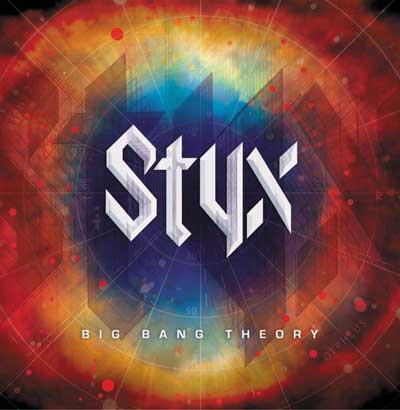
Inspired by a recording session at the legendary Chess Studios in hometown Chicago resulting in the 2004 digital download and radio success of its rendition of The Beatles' "I Am The Walrus," Styx has recorded its interpretation of the great rock & roll songbook. "Big Bang Theory" (New Door/UMe), released May 10, 2005, is the first studio album from Styx, one of the rock era's most popular bands, since 2003's Cyclorama.
Among the highlights on the 14-selection "Big Bang Theory," produced by Styx and Gary Loizzo, is "Blue Collar Man 2004," a new studio version of the band's 1978 Top 40 hit. Guesting on the track are blues great Koko Taylor and Rock and Roll Hall of Fame piano player Johnnie Johnson, renowned for his work with Chuck Berry. "Blue Collar Man 2004" was recorded in the Chicago building that once housed Chess and is now home to Willie Dixon's Blues Heaven Foundation, to which all artist royalties from the song will be donated. Heard too is their live version of "I Am The Walrus" recorded in September 2004.
The other songs re-recorded by Styx in its own instantly recognizable style are classics of the '60s and '70s, many of them favorites of the band members and their fans. Included are The Who's "I Can See For Miles," The Lovin' Spoonful's "Summer In The City," Procol Harum's "A Salty Dog," Blind Faith's "Can't Find My Way Home," Jimi Hendrix's "Manic Depression," Jethro Tull's "Locomotive Breath" and Free's "Wishing Well." The best-known recordings of "I Don't Need No Doctor" are from Ray Charles and Humble Pie. "One Way Out" is an Elmore James gem but The Allman Brothers Band laid down the most popular take.
Other songs on "Big Bang Theory" are "Find The Cost Of Freedom," originally from Crosby, Stills & Nash, "It Don't Make Sense (You Can't Make Peace)" from Willie Dixon and "Talkin' About The Good Times" from The Pretty Things.
Styx was the first band to have four consecutive triple platinum albums ("The Grand Illusion," "Pieces Of Eight," "Cornerstone," and #1 "Paradise Theatre"). Since its debut in 1972, they've also earned one double platinum, one platinum and five gold albums. "Lady" was its first of 16 Top 40s, among which also includes "Come Sail Away," "Renegade," "Blue Collar Man," and "Fooling Yourself." The video for their 1981 Top 10 single "Too Much Time on my Hands" aired in the first hour of MTV's life.
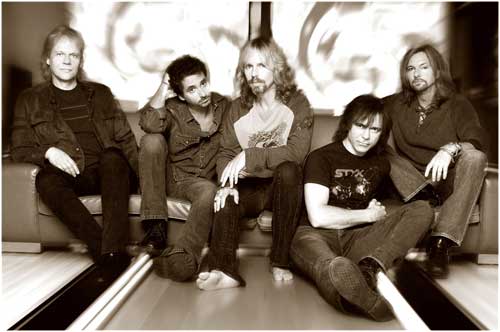
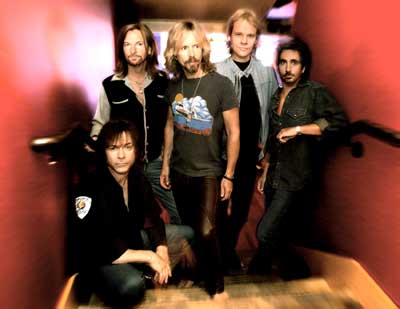
After a 1999 metamorphosis, Styx re-established itself as a dynamic live act over the course of 500-plus shows and four new live albums. Tommy Shaw (vocals, guitars), James "JY" Young (vocals, guitars), Lawrence Gowan (vocals, keyboards), Todd Sucherman (drums) and Ricky Phillips (bass guitar, backing vocals) will tour the Europe (with dates in Germany, Uk, Holland, Sweden, Italy and Switzerland) throughout 2005. Original bass player Chuck Panozzo also appears on the album and performs live with the band at select concert dates.
STYX
A BRIEF MUSICAL HISTORY
1969: After forming a band which would be known a “TW4” a few years prior, neighbors Dennis DeYoung and brothers Chuck and John Panozzo enroll at Chicago State University. Although the band had already performed in, and around, the Chicago area, C.S.U. would become the group's base. The trio hooks up with another student, John Curulewski, who takes over the helm on guitar.
1970: Guitarists James “JY” Young- who was performing with a rival band in Chicago-joins the quartet. The new line-up begins taking a different direction with more musical experiments, with classical/rock fusions and electronic trickeries.
1971: The band's demo is heard be the Wooden Nickel label, who would, subsequently, offer the band a recording contract the following year.
1972: The band is renamed STYX after a mythological river if the dead-a decision made by the band members. STYX I is released. The single, “Best Thing” (written by DeYoung and “JY”), reaches the Top 100 on the charts by the end of the year.
1973: STYX II is released, and although it doesn't chart immediately, the Dennis DeYoung penned ballad, “Lady”, gets considerable airplay on Chicago radio. The band concentrates on their touring efforts in support of the single's success, and creates a vast following of fans. The band will release The Serpent Is Rising toward the end of the year.
1974: The Serpent is Rising cracks the Top 200 Albums Chart in February, followed up by Man of Miracles, which reaches even higher position in November. “Lady” would be re-released as a single with national promotion, and the song would be propelled to #6 on the U.S. charts.
1975: STYX II rockets up the charts as a result of the success of “Lady.” It would reach #20, and sell over 500,000 units. In September, after searching for a larger and more supportive label, STYX would sign with powerhouse A&M Records. Two months later, Equinox, featuring the single “Lorelei”-would be the first A&M release, immediately reaching gold status (and eventually going platinum). At the end of the year, guitarist John Curulewski would leave the band. The band's road manager recommends 23-year-old Tommy Shaw-then guitarist for Chicago based band “MS Funk”-as a replacement. A week after auditioning, Tommy Shaw joined the band.
1976: Later in the year, the album Crystal Ball, would be released, marking the first collaboration with new guitarist Tommy Shaw. The album, which had four cuts written by Shaw, would mark the third consecutive album to go gold. A single from the album, “Mademoiselle,” would reach considerable chart success.
1977: On July 7th (7/7/77), the band released The Grand Illusion.
1978: In January, A&M Records releases the single “Come Sail Away,” which would enter the Top 10. The parent album, The Grand Illusion, hits #6 as a result of the single's success, and eventually becomes the first album from STYX to go platinum. The singles, “Fooling Yourself (The Angry Young Man),” and “Miss America” contribute to the success of the album. Later in the year, the band would follow up with another platinum-selling album (reaching #6) titled, Pieces of Eight, featuring the hit singles, “Blue Collar Man (Long Nights),” “Renegade,” and “Sing for the Day.”
1979: A national Gallup poll would reveal that STYX is the most popular rock band with teenagers (13-19 year olds). By December, the band's newest album release, Cornerstone, would hit #2 on the U.S. charts, earning the band it's third consecutive platinum album. The singles, “Babe” (reaching #1 on the charts and becoming their highest-selling single of their career), “Why Me,” and “Borrowed Time” generate mass sales.
1981: Beginning early in the year, STYX would embark on an ambitious 110 date, six-month North American tour. In April, the album Paradise Theatre would be released, soon reaching platinum success (STYX would now have four consecutive platinum albums under their belt), and remaining at #1 on the U.S. charts for three weeks. Two hit singles-“The Best of Times” and “Too Much Time on My Hands”-reach #3 and #9, respectively, on the U.S. charts. The band would become the first in the history of rock 'n' roll to have four consecutive triple-platinum albums.
1983: STYX releases concept album, Kilroy Was Here, and will tour in support of it most of the year. A stage act is built around the album, in which costumed band members have roles and dialogue in addition to performing songs. It would become one of the most ambitious rock 'n' roll tours ever. The single “Mr. Roboto,” reaches #3, and becomes the second million-selling single in the band's history (“Babe” being the first). Another single, “Don't Let It End,” also goes Top 10.
1984: The band releases a double live album titled, Caught in the Act. Although the album is well received by the record buying public, both Dennis DeYoung and Tommy Shaw decide to pursue solo projects (also on A&M records). Subsequently, the band is put on hold. Dennis DeYoung's Desert Moon and Tommy Shaw's Girls With Guns both enter top 50.
1985: In December, Tommy Shaw releases What If, which enters the Top 100, and spawns a single, “Ever Since the World Began.”
1986: Dennis DeYoung releases second solo album, Back to the World, and will also contribute a single (not from album), “This Is the Time,” to the movie, “The Karate Kid Part II.” James Young released his first solo effort, City Slicker, a collaboration with Jan Hammer.
1988: Dennis DeYoung releases another solo album, entitled Bloomchild (on MCA).
1990: Tommy Shaw forms a new band, Damn Yankees, with former Night Ranger vocalist/bassist Jack Blades, guitar virtuoso Ted Nugent, and drummer Michael Cartellone. The self-titled debut album will produce two hit singles, “High Enough” and “Coming of Age,” and will eventually sell over 2 million copies on Warner Bros. Records. The band tours extensively with Bad Company, and the album reaches #26. Toward the end of the year, STYX will reunite without Shaw (replaced by Glen Burtnik), and will release the album, Edge of the Century, which begins to garner acclaim.
1991: A single from Edge of the Century titled, “Show Me the Way,” begins chart ascension into the Top 10 during the Gulf War. With the success of the single, STYX joins an elite group of acts who have had Top 10 hits under each of the last four United States Presidents (and Top 10 hits in three different decades).
1992: Damn Yankees release their second effort, Don't Tread, on Warner Bros. Records. The album, which features the singles “ Don't Tread” and “Where Are You Goin' Now?, would eventually reach platinum status. The video for the title track would be aired throughout the 1992 Olympics.
1994: In addition to playing the roll of Pontius Pilate in the national company of Jesus Christ Superstar (to rave reviews), Dennis DeYoung cuts an album of show tunes for Atlantic Records entitled 10 on Broadway.
1995: STYX release Greatest Hits: Volume 1, featuring a re-recorded version of “Lady” with Tommy Shaw (who had not yet joined the band when it was originally recorded). Tommy Shaw and Jack Blades release an album, Hallucination, as Shaw*Blades (Warner Bros. Records). The album would be co-produced by Don Gehman of REM/John Mellencamp fame. James Young forms the James Young Group, with other Chicago musicians and tours in support of their album, Raised by Wolves (Absolute/Whitehouse).
1996: In May, the classic (and most successful) line-up returns with “The Return to the Paradise Theatre” tour, which was seen in over 50 cities. Greatest Hits: Volume II was released in the summer featuring a few new songs. For the first time in thirteen years, Dennis DeYoung, James Young, Tommy Shaw, and Chuck Panozzo were “Rockin' The Paradise.” Again…
1997: In May, CMC International Records, a division of BMG Entertainment, releases a double album of new studio tracks plus live recording of Greatest Hits from the '96 tour, appropriately titled, Return to Paradise. Due to popular demand, STYX embarks on a 50-city North American tour in support of the release.
1998: Tommy Shaw releases a solo album in CMC, 7 Deadly Zens and hits the road opening shows for Lynyrd Skynyrd. Dennis DeYoung returns to his theatrical calling as his “Hunchback of Notre Dame” enjoys a successful run in Nashville. The band starts making plans for a new studio album-the classic line-up's first in 16 years.
1999: The band goes in to the studio in Chicago and Los Angeles to record Brave New World which is released on June 29th. A tour begins in July, which will run through the end of the year.
2000: The band embarks on a 40 city co-headline tour with REO Speedwagon. The tour is so successful that the two bands record and release a double live album and DVD, “Arch Allies – Live at Riverport”. They then extend the tour (to date, Styx and REO have played over 90 shows together, consistently generating hugely successful box office numbers.)
2001: Styxworld Live 2001 is released, containing tracks recorded in Canada, Japan and Germany. The band continues its heavy touring schedule, playing 121 shows, including a 40 city tour with Bad Company that donates over $100,000 to the Rock and Roll Hall of Fame's Education Fund, marking the first time in history that the Rock Hall attaches its name to a tour.
2002: Styx plays over 90 shows and records a new studio album, set for release in the winter of 2003.
2003: Styx releases Cyclorama on February 18, 2003. The band tours extensively throughout the year in support of the record.
September 2003: Bassist Ricky Phillips replaces departing member Glen Burtnik.
|